
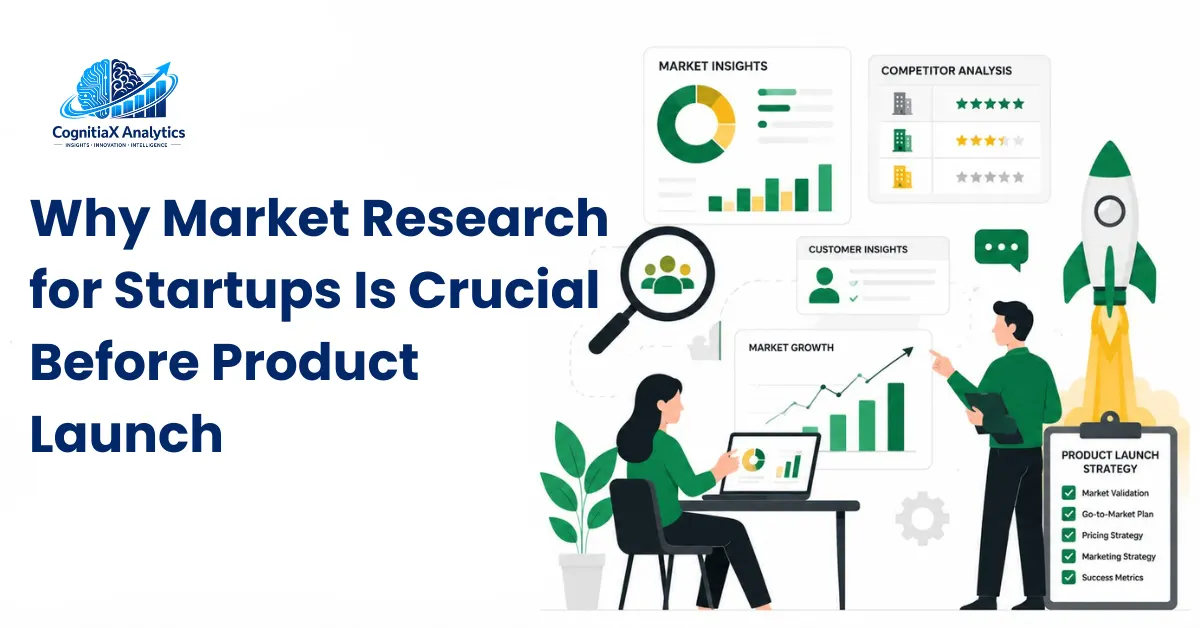
The start-up period of a new product is one of the thrilling moments of any entrepreneur. After months of planning, brainstorming and development, the product is supposed to be successful. But, many start-ups are not successful due to failure in understanding the market they are entering, not their failure in being innovative. That’s where market research for startups is invaluable.
Before investing a lot of effort and capital into product building, startups want to be sure that the idea has real demand. They should know their buyer, understand their problems and be aware of the solutions provided by competitors. If there are no such facts, then the product launch is not a business decision but a game of chance. Startups with data-driven insights are more likely to be successful in today’s competitive business environment. This article discusses the importance of market research for startups before launching the product and the benefits it provides a business with.
What Is Market Research for Startups?
Market research for start-ups involves gathering and analyzing data regarding key players, market trends and possibilities, and customers prior to launching a product or service.
The goal is to answer important questions such as:
- Is there demand for the product?
- Who are the ideal customers?
- What problems does the product solve?
- How large is the target market?
- Who are the competitors?
- What pricing strategy should be used?
These questions will help you make informed decisions and prevent costly mistakes when deciding on a startup.
Why Market Research for Startups Matters
There are lots of startup founders who’re passionate about their ideas. Passion is good but not a substitute for data. A product that is ideal to its maker, may not necessarily be ideal to the customer.
Conducting market research for startups allows businesses to validate assumptions and understand what customers truly need. This significantly improves the chances of creating a successful product.
Validating Product Demand Before Launch
One of the main reasons startups fall is that there is not enough demand for their products. So many businesses invest months into developing products only to find out that customers aren’t interested.
Market research is to see if customers really need a startup’s product. Businesses can measure interest in a product or service before committing a lot of investment into its development by conducting surveys, interviews, focus groups, and market analysis.
If the demand is validated early, startups can confidently move forward. They can change their idea if the demand is not there so as to not be wasting their resources.
Understanding Customer Needs and Pain Points
All good products are solutions to problems. The more a startup grasps that problem, the more value its solution will be.
Market research for Start up Companies offers insights regarding customer behavior, preferences, frustrations and expectations. It enables businesses to get to know:
- What customers have trouble with
- What solutions they are currently using
- What they consider the most desirable features
- What are their buying triggers:
These insights enable startups to develop products that meet customer needs.
Rather than making assumptions about what a startup should build, building solutions that people actually want to purchase.
Identifying the Right Target Audience
Many new businesses make the error of trying to appeal to a broad range of people. In fact, successful businesses are focused on particular customer groups.
Market research can be used to find out:
- Age demographics
- Income levels
- Geographic locations
- Consumer interests
- Buying behaviors
- Online habits
Knowing the target audience can help startups develop better marketing strategies and tailor their messaging.
Knowing the audience better will help a startup to allocate its marketing resources more efficiently.
Reducing Business Risks
When you start a business, there is always a level of uncertainty. But with market research for startups, that can minimize the risks, as it relies on facts—not assumptions.
Through research, start-ups can find possible challenges in advance, such as:
- Limited market demand
- Strong competition
- Pricing issues
- Customer objections
- Industry barriers
By alleviating these risks sooner, startups can steer clear of expensive pitfalls and boost their future prospects.
A company that invests in research will be better equipped to adjust to the market.
Analyzing Competitors Effectively
Every start-up has other start-ups to compete with. No market is without competition – whether it’s direct or indirect.
Market research is a crucial part of the startup process, and competitor analysis is an important aspect. It assists businesses to comprehend:
- Competitor strengths
- Competitor weaknesses
- Product offerings
- Pricing strategies
- Marketing tactics
- Customer feedback
This information will inform opportunities for differentiation.
For instance, when competitors provide expensive solutions, a start-up company could lure customers with the same value at a lower price. Knowing what kind of competition the company is facing will allow businesses to position themselves better.
Improving Product Development
Customer feedback and market demand must be taken into account at all times in Product Development.
Market research can give the company useful information that can help to make the following improvements:
- Product features
- User experience
- Design decisions
- Functionality
- Product positioning
Prototypes can be created for startups to test, collect feedback from customers and find areas to improve on before the product or service is launched.
This ensures that the product is not released to the customer if it does not meet the customer’s expectations.
If the product meets customer needs, then it will likely be accepted in the market and elicit higher levels of customer satisfaction.
Creating an Effective Pricing Strategy
The price of a product can decide if it will be successful or fail in the market place.
When prices are too high, customers will probably go elsewhere. Low prices present a problem for profitability.
Market research for startups helps businesses understand:
- What customers are willing to pay
- Industry pricing benchmarks
- Competitor pricing structures
- Perceived product value
Using these insights, startups can develop pricing strategies that balance customer expectations with business profitability.
Supporting Better Marketing Decisions
Marketing is more effective when it is backed by research.
Market research helps startups understand:
- Which platforms customers use
- What type of content they prefer
- Which messages resonate most
- What motivates purchasing decisions
A start-up focused on business people could find LinkedIn more effective than other social media sites, for instance.
These learnings help firms work out the best marketing strategies and increase their return on investment.
Discovering Market Opportunities
Markets are dynamic as customers’ preferences, new technology, and economic factors all change.
Market research for startups can help you find out:
- Emerging industry trends
- Untapped customer segments
- New business opportunities
- Potential product expansions
Spotting these opportunities early can give startups an edge and set them up for success.
Companies who are paying attention to the trends in the market tend to be more flexible and creative.
Primary and Secondary Research Methods
There are two main types of market research that startups can use.
Primary Research
Primary research involves collecting original data directly from potential customers.
Examples include:
- Surveys
- Customer interviews
- Focus groups
- Product testing
- Feedback forms
Primary research provides first-hand insights into customer opinions and preferences.
Secondary Research
Secondary research involves analyzing existing information from trusted sources.
Examples include:
- Industry reports
- Government statistics
- Market studies
- Competitor websites
- Research publications
Combining primary and secondary research creates a more complete understanding of the market.
Common Startup Mistakes That Market Research Prevents
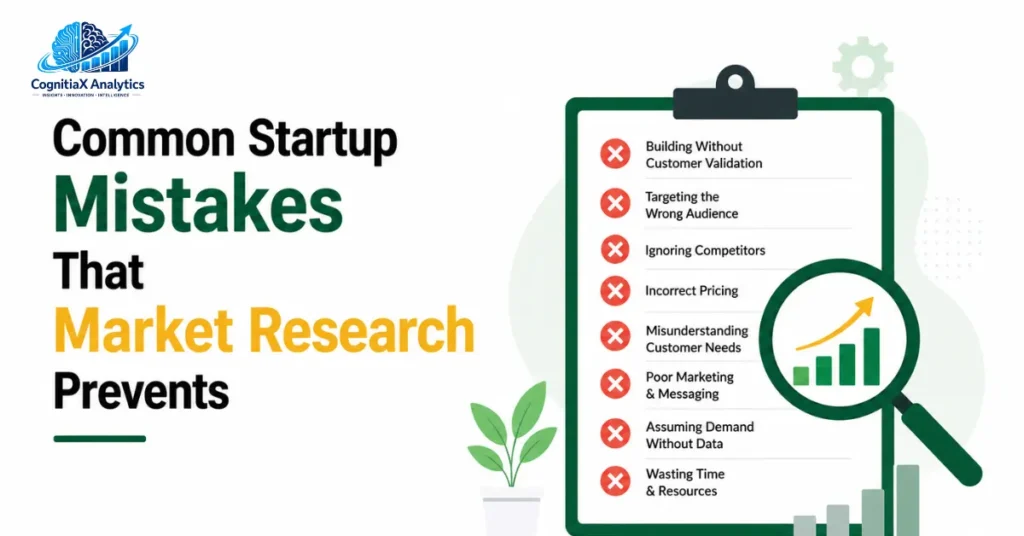
Skipping market research often leads to costly business mistakes, including:
- Launching products without demand
- Targeting the wrong audience
- Ignoring competitors
- Setting incorrect prices
- Misunderstanding customer needs
- Poor marketing performance
Most of these problems can be avoided through effective market research for startups.
Research provides clarity and helps businesses make strategic decisions from the beginning.
How CognitiaX Analytics Supports Startup Growth
At CognitiaX Analytics, we help startups make smarter decisions through data-driven research and business intelligence.
Our services include:
- Consumer Insights
- Competitor Analysis
- Market Opportunity Research
- Industry Trend Analysis
- Business Intelligence Reports
- Strategic Recommendations
We transform raw data into actionable insights that help startups launch products with confidence and reduce business risk.
Conclusion
Market research for startups is one of the most important investments a business can make before launching a product. It helps validate demand, understand customers, analyze competitors, reduce risks, and improve decision-making.
Rather than relying on assumptions, successful startups use data to guide every stage of product development and market entry.
In a highly competitive marketplace, businesses that conduct thorough market research gain a significant advantage. They are better equipped to meet customer needs, identify opportunities, and achieve sustainable growth.
Before launching your next product, make market research a priority. The insights you gain today could determine the success of your business tomorrow.